
The Cost of Silence – Healthcare Facilities
In healthcare facilities management (FM), the risk of inaction measures how po0r processes, deferred maintenance, code compliance issues… erode asset value, safety, and patient care.
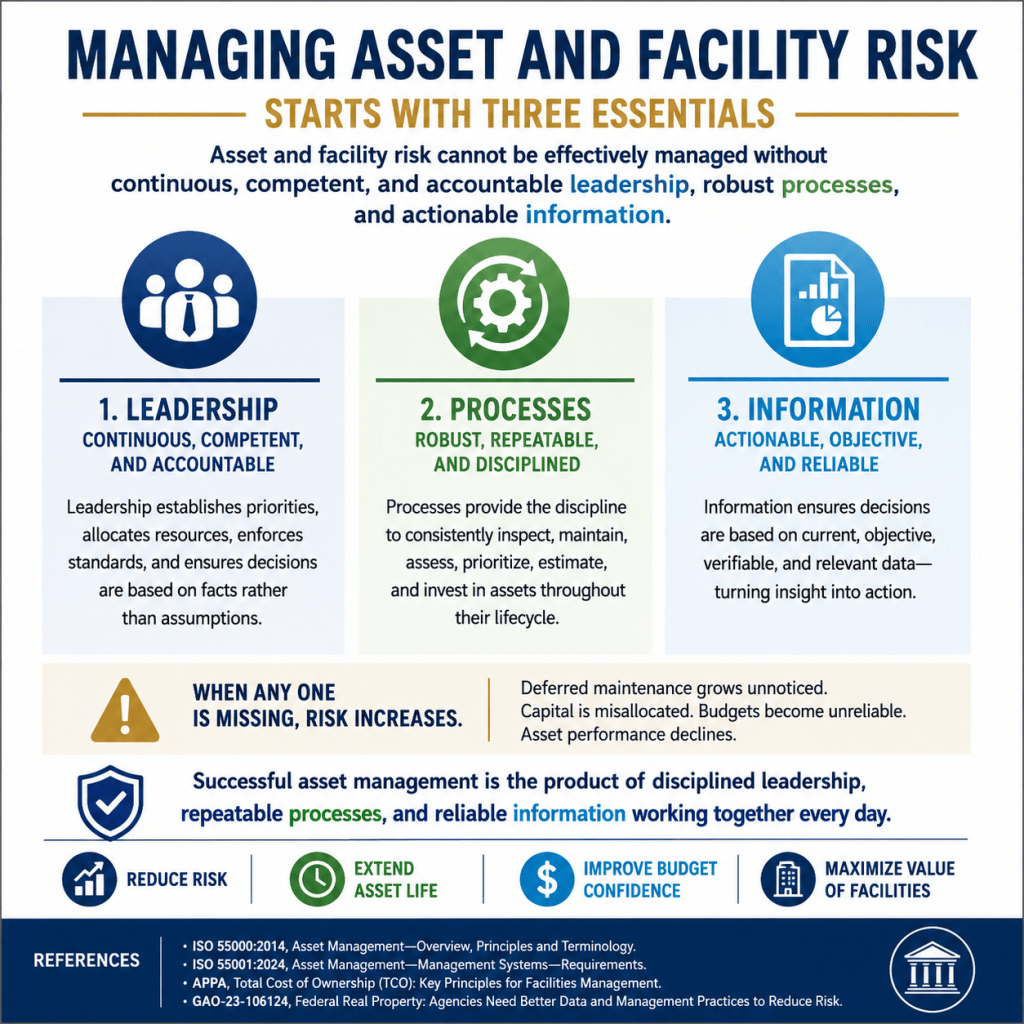
When maintenance planning, procurement, and delivery lack robust processes threats to the organization mission are increased.
Relying strictly on short-term financial metrics frequently obscures the true operational and safety liabilities growing behind the scenes.
Transitioning from reactive spending to strategic capital planning requires understanding three catastrophic risks of keeping critical facility upgrades on hold.
1. Equipment Failures: Operational and Revenue Paralysis
Aging HVAC, power, or surgical systems break down unexpectedly, halting critical care and revenue.
For example, environmental fluctuations stemming from faulty climate systems immediately impact clinical infection control protocols and risk compromising medical gas or life-support operations.
2. Compliance Violations: Regulatory Audits and Accreditation Risks
Outdated tracking and deferred fixes breach standards set by agencies like The Joint Commission or OSHA.
Healthcare facilities must remain continuously audit-ready. Postponing necessary infrastructure overhauls makes meeting evolving regulatory demands increasingly difficult. conditional accreditation statuses.
3. Financial and Safety Costs: The Compounding Penalty of Reactive Maintenance
Reactive maintenance drives up total ownership costs, liability exposure, and infection risks.
Putting off infrastructure care creates a compounding financial backlog. Reactive emergency spending that draws critical funding away from modern clinical technologies.
To protect patients and operational margins, healthcare leadership must stop looking at facilities management as a pure liability and start looking at it as a strategic investment.

 4bt.us


#healthcare #facilitiesmanagement #preventivemaintenance #safety #compliance